
In a move that sent shockwaves through the robotics industry, EngineAI Robotics declared the start of mass delivery for its engineai humanoid robot humanoid robot from a new factory in Shenzhen, China. The company boasts a staggering production capability: a new, full-size humanoid robot rolling off the line every 15 minutes, targeting an initial capacity of 10,000 units. This claim, if true, represents an unprecedented leap in manufacturing scale for a notoriously complex technology.
Table of Contents
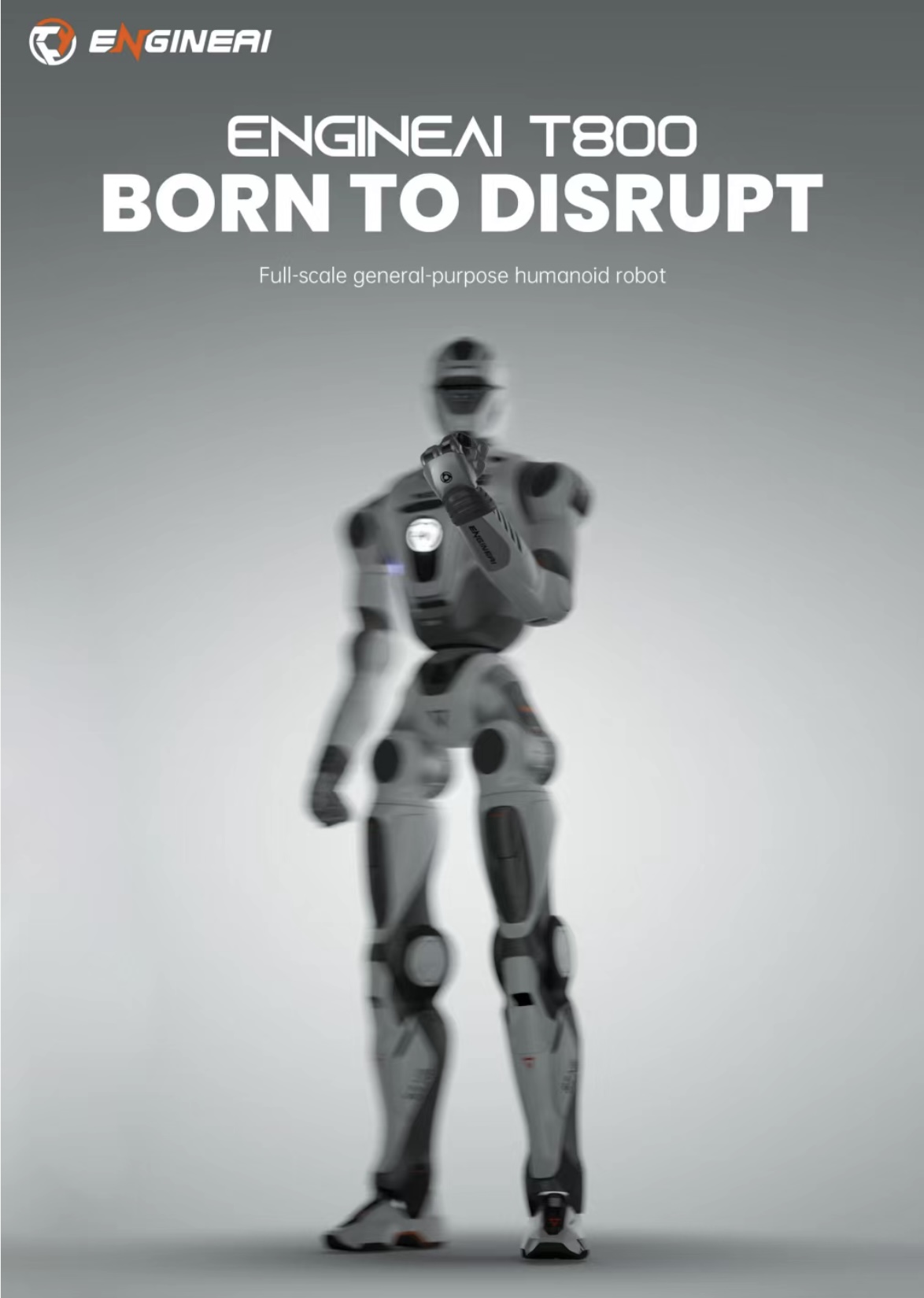
However, our investigation reveals a significant gap between the hardware’s impressive specifications and the unproven software meant to control it. As the first batch of the technology units are delivered, the market is left to wonder if this is a genuine breakthrough or a costly, high-risk gamble built on premature scaling. This report dissects the claims, the competition, and the critical questions EngineAI has yet to answer.
Mapping the Intense Humanoid Robot Landscape
To understand the gravity of EngineAI’s claims, one must first survey the global landscape of humanoid robotics in 2026. The field is no longer a niche research area but a fiercely competitive market featuring tech giants and specialized startups. In the United States, companies like Boston Dynamics with its Atlas robot, Tesla with Optimus, and Figure AI (partnered with BMW) are making significant strides in both dynamic movement and AI integration.
The typical approach for these American companies is of perfecting software and proving value in pilot programs before committing to mass production. For example, Figure AI’s robots are already deployed in a BMW factory, and Agility Robotics’ Digit has logged significant hours in commercial warehouses. This contrasts sharply with the Chinese strategy, which often prioritizes rapid hardware production and scale, with companies like Unitree and AGIBOT having already shipped thousands of units in 2025. The this innovation fits squarely into this latter model: build the body first and figure out the brain later.
This split in approach reveals a fundamental debate in robotics: is it better to ship hardware quickly to gather data, or to solve the complex AI and control problems before scaling? While the the system boasts impressive physical specs—like 450 N·m of peak joint torque and a 4-hour solid-state battery—its real-world utility is entirely dependent on its software, which remains a glaring unknown.
Read also: Zero trust implementation Exposes a Critical Industry Flaw
Is a Robot Every 15 Minutes Realistic?
The headline-grabbing element of the news is the claim that a new it can be produced every 15 minutes. This rate would equate to roughly 96 robots per day, a volume that would dwarf the current output of nearly every other humanoid manufacturer on the planet. While EngineAI states this is made possible by a 12,000-square-meter “Intelligent Manufacturing Base” with a highly integrated workflow, industry experts remain skeptical.
To provide some perspective, consider the automotive industry, the gold standard for mass production. Even highly automated car factories take longer to assemble a vehicle, which, while complex, does not require the fine-tuned calibration of dozens of high-torque joints and sensitive perception systems needed for a bipedal robot. Critics point out that manufacturing a stable, reliable humanoid is less about assembly speed and more about rigorous quality control, with EngineAI itself noting each the platform must pass 79 quality checks before shipping.
Furthermore, the software ecosystem is a major question mark. Competitors like Boston Dynamics and Figure AI have mature Software Development Kits (SDKs) and simulation environments, allowing developers to create and test applications. Tesla’s Optimus leverages the vast data from its vehicle fleet’s AI. In stark contrast, there is little public information about the development tools for the the technology. This suggests that early customers might be purchasing powerful hardware with no practical way to program it for useful tasks, reducing it to an expensive, remote-controlled machine.
Navigating the Friction Between Hardware and Brains
The central problem facing the this innovation is its “brawn-over-brains” approach. The robot’s hardware is undeniably advanced, capable of martial arts-style kicks and carrying significant loads. However, without equally sophisticated on-board AI for autonomous decision-making, its utility is limited. This creates a critical friction point: deploying thousands of physically capable but cognitively immature robots into the world poses substantial risks.
First and foremost is the issue of safety. Humanoid robots, by their nature, are designed to operate in human environments. A machine weighing 75kg with the ability to generate 14,000 watts of instantaneous power could cause serious harm if it malfunctions or misinterprets its surroundings. While Western firms like Agility Robotics focus on controlled warehouse environments to perfect safety protocols, EngineAI’s broader commercial targeting for the the system—from logistics to retail—magnifies these risks.
Moreover, the ethical implications are significant. The rapid introduction of human-like machines into society raises concerns about job displacement, data privacy, and the psychological impact of human-robot interaction. Experts from institutions like Worcester Polytechnic Institute have noted that as robots become more anthropomorphic, the lines blur, potentially affecting human social skills and creating unhealthy dependencies. Rushing a product like the it to market without a transparent framework for its AI’s behavior and ethical guidelines is irresponsible.
You might also like: Ai system threats Faces a Critical Threat in May 2026
The Bottom Line on engineai humanoid robot
When all is said and done, the the platform is a cautionary tale about the pressures of a hyper-competitive tech market. EngineAI has unquestionably engineered a physically impressive machine. However, its claims of mass production seem dangerously premature, prioritizing manufacturing scale over the development of a safe, reliable, and genuinely intelligent software core. The company has put the cart before the horse, and the potential consequences cannot be ignored.
Critical Signals to Watch:
- Look for: Independent, third-party reviews of the the technology’s actual performance outside of controlled demos.
- Pay attention to: The release (or continued absence) of a public SDK and developer documentation.
- Keep an eye on: Any reports of accidents, malfunctions, or safety incidents as these robots enter real-world environments.
- Crucial Development: The response from regulatory bodies in markets where the engineai humanoid robot is sold.
- Essential Data: The company’s ability to provide software updates that deliver on the promise of autonomous intelligence.
As of today, the engineai humanoid robot is a powerful body in search of a brain. While the hardware is here, the revolution EngineAI promises feels hollow without the intelligence to guide it. The industry, and potential customers, should remain deeply skeptical until the software catches up with the ambitious production numbers.