
Pundits are declaring that embedded systems has finally turned the corner, moving from a promising alternative to a production-ready reality. The buy-in from the automotive sector, a notoriously conservative and demanding field, appears to be a major validation for the technology, with Infineon leading the charge. However, a skeptical analyst must ask: does the marketing hype match the technical reality on the ground in the second quarter of 2026? This deep dive will scrutinize these claims and expose the hidden risks and contradictions that remain.
Table of Contents
The State of the embedded systems Union in 2026
Despite the marketing of a monolithic entity, the world of this innovation is far from uniform. While the open-source nature of the ISA is its greatest strength, it also fosters a diverse, and at times fractious, community. Major US tech companies like Qualcomm, Google, and Meta are investing heavily, seeing the system as a strategic alternative to the licensing fees and restrictions of Arm. Simultaneously, the architecture has become a cornerstone of China’s push for semiconductor sovereignty, allowing it to develop indigenous technology stacks free from Western export controls.
By definition, it lacks a traditional technical moat because it is an open standard. The real power players are those who can marshal the resources to build a competitive software and tooling ecosystem around their implementations. This includes IP providers like SiFive, whose new Performance P570 Gen 3 core boasts significant AI workload improvements, and consortia like Quintauris—a joint venture by Bosch, Infineon, NXP, and others—aimed at standardizing the platform for automotive use. This has driven market penetration to an estimated 25%, a figure that, while impressive, is more nuanced than it appears, referring mainly to markets where the architecture already has a foothold.
The primary battleground is no longer just in low-power embedded devices but has expanded to data centers, AI accelerators, and high-performance computing.
Read also: In-vehicle infotainment Faces a Critical Threat from Consolidation
AI-Native Claims vs. The Fragmentation Threat
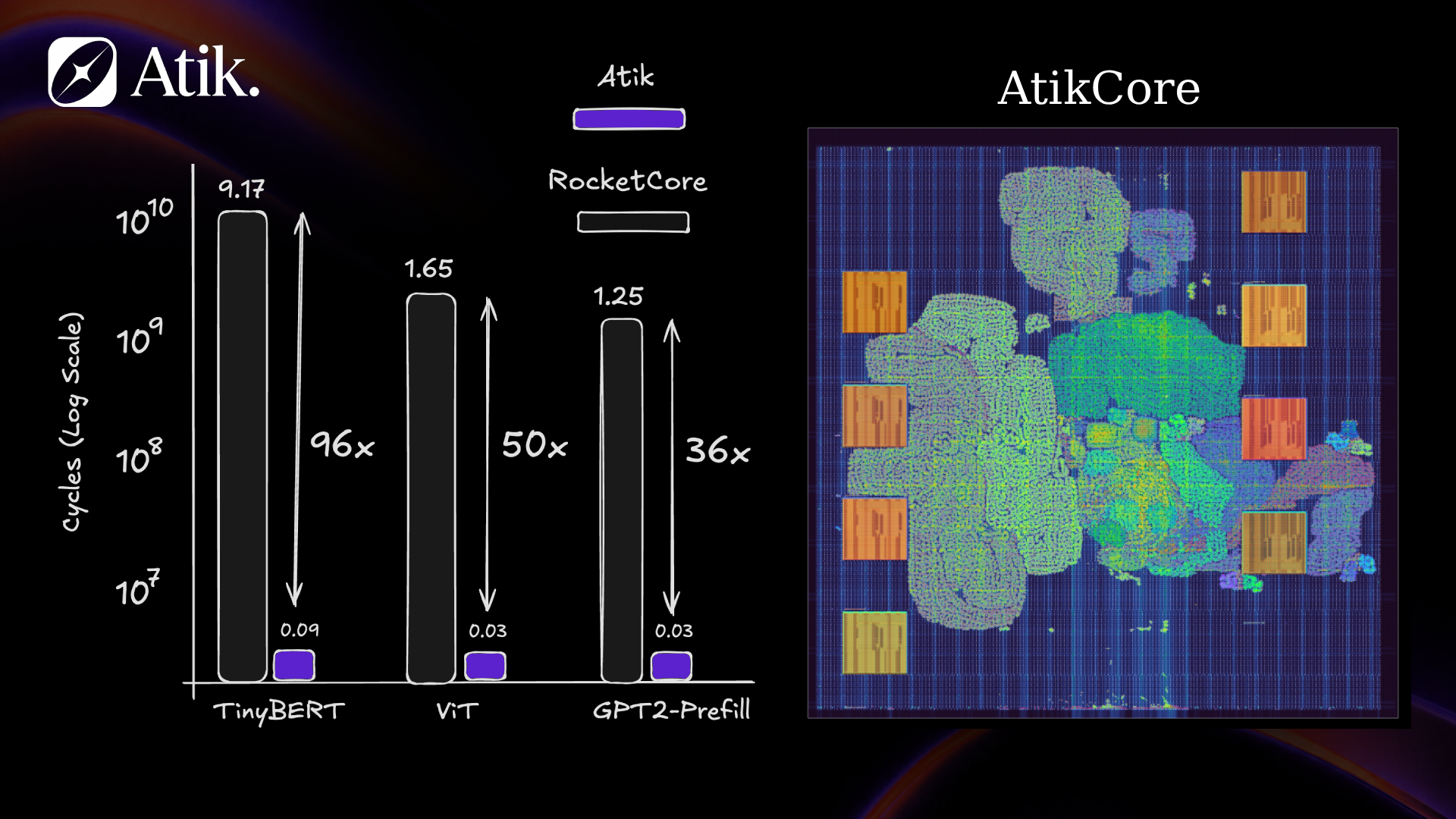
The central claim from Embedded World 2026 was the pivot of the technology to “AI-Native” designs. This narrative overlooks some difficult truths. While new cores like the SiFive P570 Gen 3 show remarkable gains on specific AI workloads thanks to new vector dot-product extensions, this performance is not universal. Critics point out that many “AI-native” approaches still involve a RISC-V CPU communicating with a separate matrix engine across a bus, which introduces latency and bottlenecks—an old architecture problem in a new package.
The double-edged sword of this innovation is its customizability, which is both a key feature and the source of its most critical danger: fragmentation. With so many companies adding their own proprietary extensions, there is a growing danger that software written for one the system chip will not run on another. This creates serious challenges for software developers and undermines the promise of a unified open standard. While organizations like RISC-V International are working to ratify standard profiles like RVA23, the proliferation of custom, non-standard extensions remains a major concern for long-term ecosystem health.
The “production ready” label from Infineon, for example, is for an MCU family with samples in 2026 but mass production not slated until 2028-2029, a timeline that underscores the remaining development and validation hurdles.
Navigating the Friction Between Collaboration and Competition
The it movement faces an inherent contradiction. On one hand, its success depends on open, global collaboration and strict standardization to ensure software compatibility. On the other hand, it has become a primary tool in the intensifying geopolitical competition for technological supremacy. The move of the RISC-V International headquarters to Switzerland was a deliberate attempt to maintain neutrality, but the reality is that national interests are heavily influencing development. This tension is the single greatest threat to the architecture’s future.
This friction is readily apparent when examining the software ecosystem. While there has been tremendous progress, with major Linux distributions and Android now supporting the platform, the software stack still lags behind the maturity of Arm and x86, especially for legacy enterprise applications. The problem of fragmentation exacerbates this, as software developers may need to support multiple, slightly different versions of the technology, negating some of the benefits of an open standard. An analyst report highlights that while the flexibility to add custom extensions is a key benefit, it creates compatibility challenges that require delicate balancing between standardization and innovation.
This challenge is not just technical; it’s a governance nightmare that pits the collaborative needs of a global standard against the competitive and nationalistic goals of its most powerful members.
You might also like: 2nm chipmaking: The Critical Breakthrough for 2nm Chips?
The Bottom Line on embedded systems
To sum up, the narrative that this innovation achieved full production and AI-native readiness in 2026 is a costly oversimplification. While the architecture has made truly remarkable progress, particularly in the embedded and automotive sectors, the ecosystem is fraught with hidden risks. The promise of an open, unified standard is directly threatened by the specter of fragmentation and the cross-currents of geopolitics. The hype is real, but so are the hurdles. For now, embedded systems remains a powerful but volatile force in the semiconductor industry.
Critical Signals to Watch:
* Monitor: The adoption rate and enforcement of standardized profiles like RVA23 versus the proliferation of custom, proprietary extensions.
* A critical signal: Progress on high-performance binary translation tools to bridge the legacy software gap for enterprise and desktop applications.
* Keep an eye on: The market performance and software compatibility of the first wave of high-volume automotive MCUs from players like Infineon and the Quintauris consortium.
* Pay close attention to: Any divergence in the development paths between Western-led and Chinese-led embedded systems initiatives, which could signal a permanent schism in the “open” standard.
* Look for: The success of unified AI compute designs that integrate CPU, vector, and tensor operations into a single engine, versus the persistence of less efficient CPU-plus-accelerator models.
The coming 18-24 months will be decisive. Whether embedded systems solidifies into the “third pillar” of computing or shatters into a collection of incompatible, niche architectures depends entirely on the community’s ability to navigate these complex challenges.