A new report sounds the alarm: artificial intelligence is rapidly approaching a physical limitation known as the compute-in-memory. This isn’t a software bug or an algorithmic flaw; it’s a fundamental hardware crisis. An influential analysis by Purdue University Professor Kaushik Roy highlights that the decades-old method of separating computer memory from processing units is now a major bottleneck. As AI models grow exponentially—with some language models expanding 5,000-fold in just four years—the energy and time spent shuttling data back and forth is becoming unsustainable. This traffic jam on the information superhighway threatens to stall AI progress, driving up costs and limiting the potential for real-time, on-device intelligence.
Table of Contents
The future of AI, from massive data centers to your smartphone, may depend on breaking through this wall.
Understanding the Hardware Stalemate
At the heart of the problem the Von Neumann architecture, the foundational design for most modern computers. Proposed in 1945, it separates the Central Processing Unit (CPU) from memory. For decades, this model served the industry well. But for the massive, parallel workloads of modern AI, it creates the infamous “Von Neumann bottleneck.” Each computational step requires data to be fetched from memory, sent to the processor, calculated, and written back. This constant data movement consumes enormous amounts of energy and time, now accounting for the majority of the overhead in AI processing.
Industry giants like NVIDIA have built empires on optimizing this architecture with powerful GPUs, but even they are constrained by this physical separation. As AI models demand ever-larger datasets and more complex parameter sets, the processor spends an increasing amount of time idle, simply waiting for data. This inefficiency is the essence of the compute-in-memory. This represents a foundational challenge where faster processors don’t equate to faster real-world performance because the data highway is permanently congested. The relentless growth of AI is turning this long-understood limitation into an urgent, industry-wide crisis.
You might also like: Ai safety: A Critical Risk Analysis for 2026
Scrutinizing the Solutions to the compute-in-memory
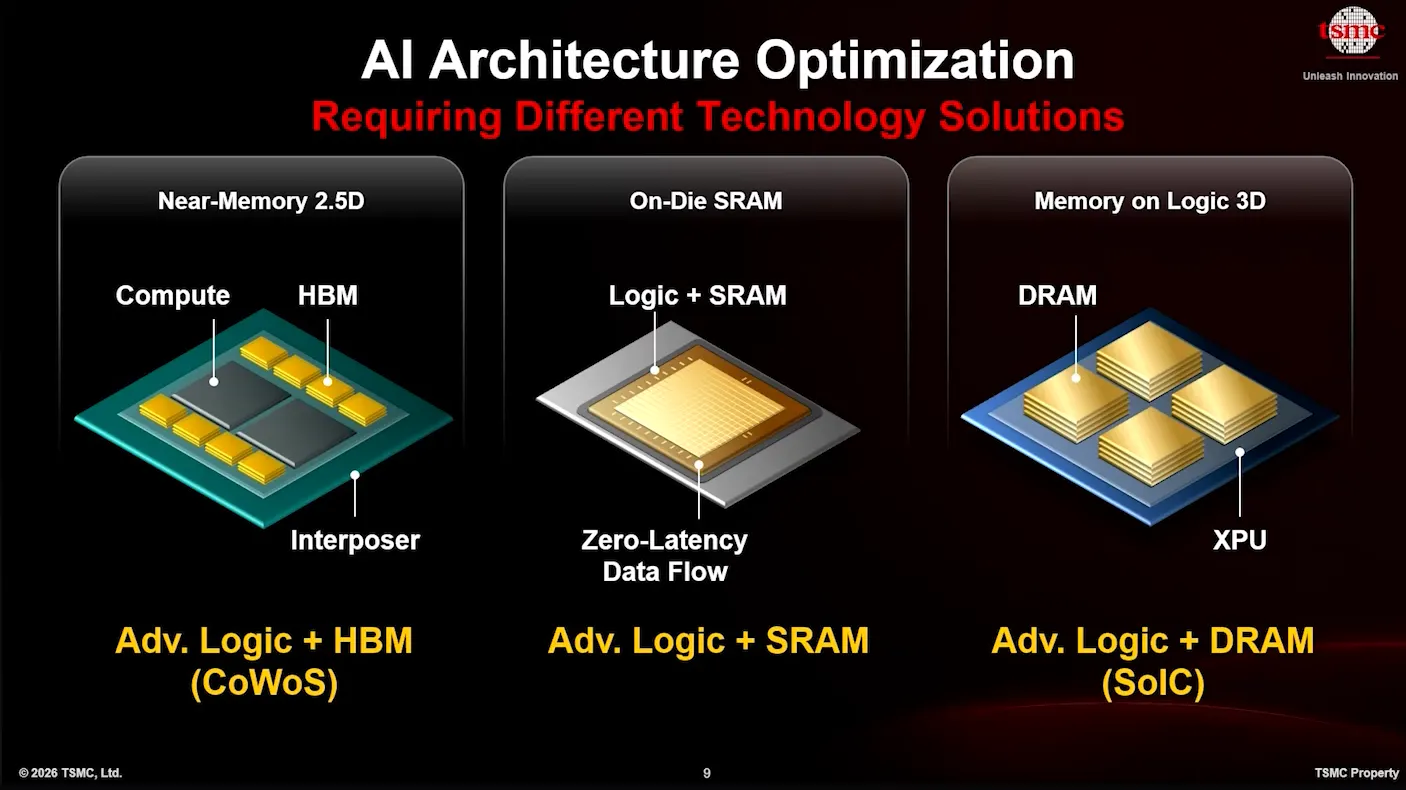
In response to this growing crisis, researchers like Professor Roy are championing several radical hardware redesigns. The most prominent of these is Compute-in-Memory (CIM), a paradigm that performs calculations directly inside or near the memory cells, significantly reducing data movement. On paper, this could slash energy use and latency, breaking the compute-in-memory. Companies and research labs are exploring various CIM approaches using novel materials like ReRAM and MRAM.
However, a skeptical analysis reveals these solutions are far from a silver bullet. While proponents tout the potential, our research uncovers significant practical hurdles. A primary concern is that many CIM designs are analog, making them susceptible to noise, temperature variations, and manufacturing imperfections, which compromises the precision required for many AI tasks. Furthermore, a 2026 analysis of memristor-based CIM notes that while wafer-scale fabrication is now possible, challenges in device uniformity and reliability persist. Another proposed solution, Spiking Neural Networks (SNNs), mimics the brain’s event-driven nature to save power. While promising, SNNs still lag behind traditional networks in accuracy for many benchmarks and lack a “killer app” to drive widespread adoption over mature GPU ecosystems.
Economic Hurdles vs. Technological Imperatives
The drive to solve the compute-in-memory is creating a significant contradiction between technological necessity and economic reality. On one hand, continuing to scale AI requires a fundamental shift away from Von Neumann architecture. On the other, the financial and logistical costs of developing and deploying these new hardware paradigms are astronomical. Building new semiconductor fabs for exotic materials or entirely new chip layouts requires tens of billions of dollars and years of re-tooling.
This economic friction is a central theme in recent industry analysis. Market research firm Gartner forecasts that data center systems spending will surge to nearly $788 billion in 2026, largely driven by AI infrastructure demands. This spending spree creates immense pressure on supply chains, particularly for essential components like High-Bandwidth Memory (HBM), leading to record price increases and shortages. An investment memo from May 2026 even highlights the emergence of a new “memory supercycle,” suggesting that memory bandwidth is becoming as critical an investment theme as the GPUs themselves. The challenge is that while we desperately need a solution to the compute-in-memory, the transition itself could be prohibitively expensive and disruptive for all but the largest hyperscalers.
You might also like: Scientific exploration: A Critical Warning for Scientific Discovery
The Bottom Line on compute-in-memory
The conclusion is inescapable that the compute-in-memory is not a future problem; it is a present-day constraint actively shaping the limits of artificial intelligence. While the incumbent Von Neumann architecture is hitting a wall, the proposed successors like compute-in-memory and neuromorphic computing are still navigating significant technical and economic hurdles. Their promise is immense, but their commercial readiness for broad, high-performance applications remains in question. For the immediate future, the industry will likely pursue a hybrid approach, co-designing algorithms and hardware to squeeze every last drop of efficiency from existing systems while investing heavily in next-generation research.
Critical Signals to Watch:
- Watch for: The market performance and adoption rate of the new Roundhill Memory ETF (DRAM), as it serves as a financial barometer for the severity of the compute-in-memory.
- Indicator: Benchmark results from Computex 2026 and other industry events comparing novel architectures from startups against next-generation GPUs from NVIDIA.
- Market trend: Whether major cloud providers like AWS and Azure begin offering access to commercially viable neuromorphic or compute-in-memory hardware platforms.
- Regulatory sign: How funding from government initiatives like the CHIPS Act is allocated—either toward optimizing existing fabs or building new ones for non-Von Neumann designs.
- Key metric: The crossover point where a spiking neural network running on specialized hardware definitively beats a state-of-the-art GPU on both performance and energy efficiency for a mainstream AI workload.
The final word is that the compute-in-memory represents the next great battleground in the semiconductor industry. The companies and nations that solve this bottleneck won’t just build faster computers; they will define the trajectory of AI for the next decade.