
In the wake of MyBull Robotics U.S. opening its new headquarters in Farmington Hills, Michigan, the hype surrounding its indoor/outdoor autonomous logistics robots is palpable. The company asserts its range of tuggers and forklifts can operate on challenging terrain and in all weather conditions, a significant declaration aimed at disrupting the North and South American markets. But our investigation suggests a significant gap between marketing promises and the complex reality of US industrial automation. This move by the technology signals a direct challenge to established players, but the question remains: is the technology truly ready?
Table of Contents
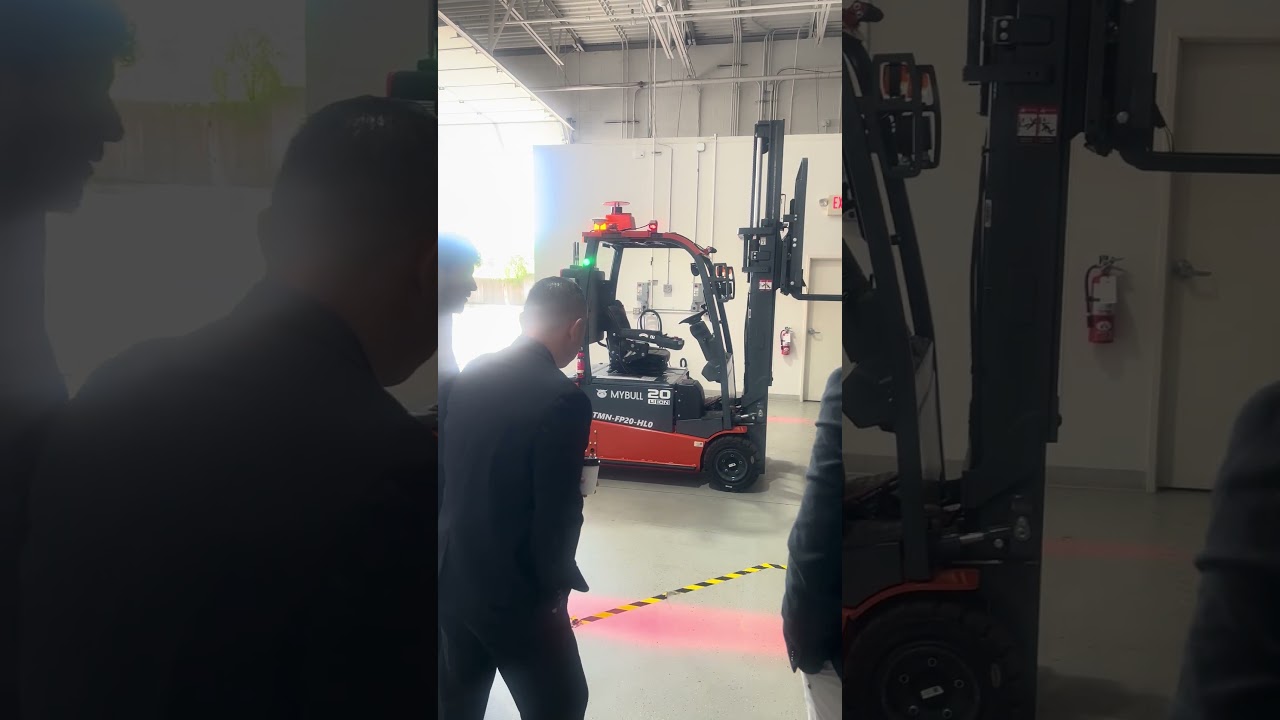
Industry insiders understand the autonomous mobile robot (AMR) space is intensely competitive. While the promise of this innovation is its unique indoor/outdoor capability, the market is already dominated by established giants.
The Competitive Landscape for autonomous logistics
To fully grasp the challenge facing the system, one must look at the current power players. Companies like Seegrid, known for their vision-guided vehicles, and OTTO Motors, a division of Clearpath Robotics, have spent over a decade perfecting their fleet management software and safety protocols for indoor environments. Their technological “moat” isn’t just the hardware; it’s the vast amount of data from millions of operational hours, which fine-tunes predictive maintenance, traffic flow algorithms, and ANSI/RIA safety compliance.
Furthermore, the recent acquisition of Fetch Robotics by Zebra Technologies highlights a market trend toward integrated solutions, not just standalone robots. These systems combine AMRs with handheld scanners, warehouse management software (WMS), and a deep understanding of existing workflows. The key takeaway is that it isn’t just selling a robot; it’s trying to break into a complex, software-driven ecosystem. The success of the platform will depend less on the robot’s physical toughness and more on its ability to integrate seamlessly with the digital backbone of a modern warehouse.
Does autonomous logistics Really Work Outdoors?
This brings us to the central claim made by the technology: robust operation in “all weather conditions” on “challenging terrain.” While the MyBull Robotics corporate website showcases videos of its units navigating wet pavement and gravel lots, independent verification of these claims is nearly impossible to find as of May 29, 2026. Our research into academic databases and industry safety forums reveals a consensus: true all-weather autonomy for ground vehicles remains a largely unsolved problem.
For example, LiDAR sensors, which are crucial for navigation, can be drastically impaired by heavy rain, snow, or fog. Camera-based vision systems struggle with sudden changes in light, such as moving from a dark warehouse into bright sunlight, or with low-contrast environments during a blizzard. While this innovation may have engineered powerful hardware, the physics of sensor technology and the unpredictability of outdoor environments present a significant hurdle. The company’s silence on which specific sensor fusion techniques or data sets they’ve used to overcome these well-known issues is concerning.
A Looming Threat from Safety Standards
The biggest challenge for the system is not technical but regulatory. The idea of a fully autonomous, 2-ton forklift operating outdoors alongside human workers and other vehicles runs directly into a confusing web of safety standards. Organizations like the Occupational Safety and Health Administration (OSHA) have stringent rules for powered industrial trucks, and the standards for autonomous versions are still evolving. This is the core technological contradiction of it: its main selling point—outdoor autonomy—is also its greatest liability.
Guidance from firms like Gartner often highlights the “human-in-the-loop” requirement for high-risk automation. Until the platform can definitively prove that its system’s failure modes in a dynamic outdoor setting are safer than a human-operated vehicle, its adoption will be limited to highly controlled, segregated zones. This completely undermines the vision of a single, seamless fleet operating both inside and out. The risk of a catastrophic failure in a shared, open-air environment is simply too high for most risk-averse industrial clients to stomach without years of proven safety data.
The Bottom Line on autonomous logistics
The final analysis shows, the launch of MyBull Robotics in the US is a bold move built on an even bolder promise. While the hardware appears rugged, the technology faces a monumental task in proving its all-weather, all-terrain capabilities against the hard realities of sensor physics and regulatory scrutiny. The company’s success hinges on its ability to provide transparent, third-party-verified data that proves its systems are not just capable, but fundamentally safe in the unpredictable outdoor world. For now, skepticism is warranted.
Critical Signals to Watch:
- Monitor for: The first independent, peer-reviewed performance and safety audits of this innovation systems in genuine industrial (not test-track) settings.
- A critical indicator will be: Any updates to ANSI/ITSDF B56.5 or other relevant safety standards that specifically address outdoor autonomous mobile robots.
- Watch for: The announcement of a major pilot program with a Fortune 500 company that has a strong, public-facing safety culture.
- Monitor: Competitor responses from Seegrid, OTTO Motors, or even Boston Dynamics, and whether they accelerate their own outdoor-rated development.
For now, the story of autonomous logistics is one of ambition meeting reality. The next 12-18 months will determine if it’s a true breakthrough or just a costly overreach.