
Just yesterday, on May 28th, European aerospace giant Airbus revealed a major partnership with airbus mistral, aiming to embed artificial intelligence across its vast operations. The deal, framed as a decisive step toward “sovereign AI,” gives Airbus full access to Mistral’s models for everything from commercial aircraft design to sensitive defense applications. This collaboration is designed to ensure that critical aerospace data and AI processes adhere to strict European security and sovereignty mandates.
Table of Contents
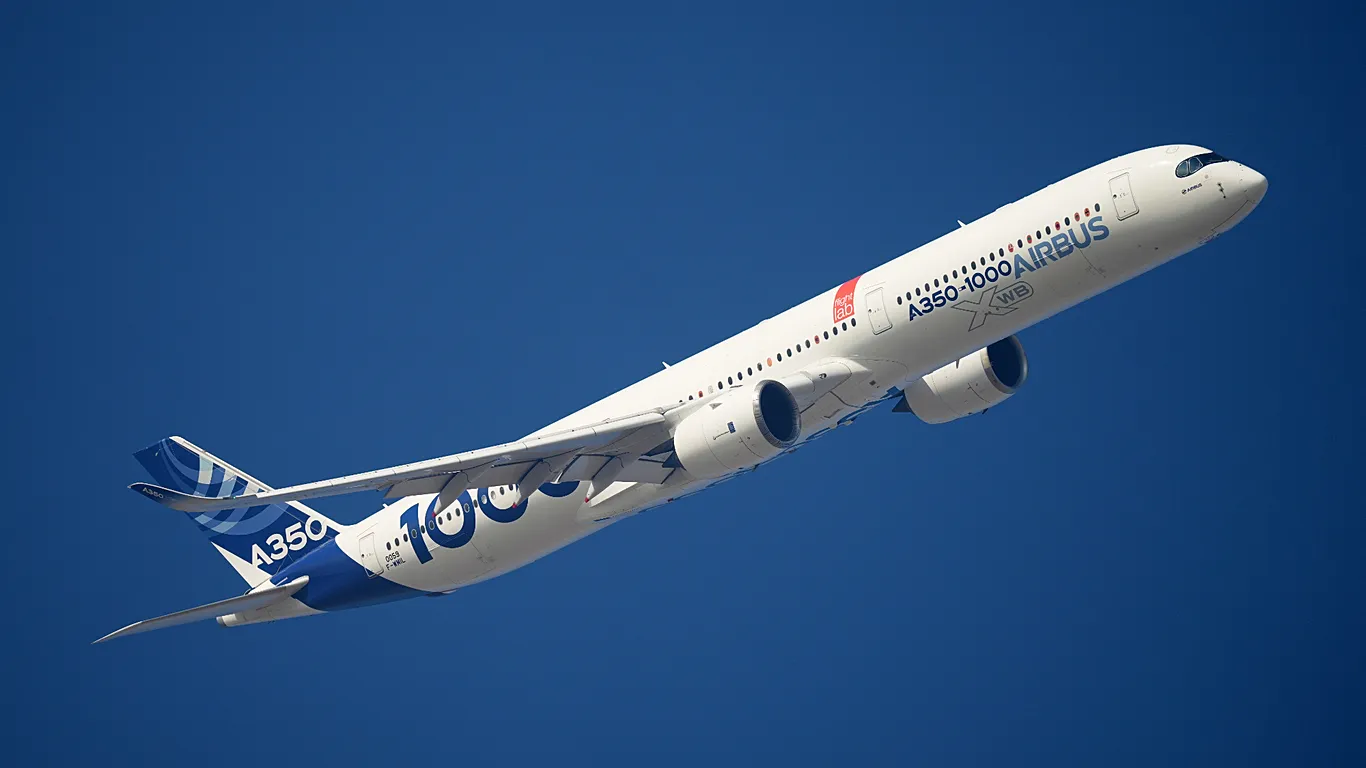
Initially, this appears to be a massive validation for the technology, positioning it as the continent’s designated AI champion for high-stakes industries. The agreement allows Airbus to deploy models on-premises or in trusted clouds, maintaining control over its data and sidestepping reliance on US-based hyperscalers. However, a deeper investigation reveals a more complex and perilous landscape. This alliance isn’t just about innovation; it’s a high-stakes bet on the very definition of technological sovereignty, unfolding just as the EU’s own regulations threaten to complicate the mission.
Mistral’s Strategy for AI Dominance
To fully appreciate this collaboration, one must first understand the concept of “sovereign AI”. It refers to a nation or region maintaining independent control over its entire AI supply chain—from the data and algorithms to the physical hardware. The goal is to ensure that critical national infrastructure, defense systems, and economic drivers are not dependent on foreign entities or subject to foreign laws. This is especially crucial in a world where AI is a primary driver of geopolitical competitiveness.
Industry analysis shows that this innovation has been aggressively positioning itself as the cornerstone of this European strategy. At its AI Now Summit in May 2026, the company announced a full-stack platform targeting industrial engineering, with launch partners including not just Airbus but also BMW Group and ASML. CEO Arthur Mensch has explicitly stated that owning the full stack, from “electrons to tokens,” is fundamental to deploying enterprise AI. This ambition is backed by a new 10 MW inference data center opening near Paris in Q3 2026, designed to secure compute capacity for itself and its customers.
Read also: Ga2o3 semiconductor: A Critical Warning for the Semiconductor Sector
The objective is unmistakable: the system aims to be the go-to provider for any European enterprise in a regulated industry that refuses to hand sensitive data to American tech giants. By acquiring companies like Emmi AI for physics-based simulations, Mistral is building a specialized moat that generic models from competitors like OpenAI or Google can’t easily cross. This makes it a central player in Europe’s push for digital self-determination.
The Sovereignty Paradox: European AI on American Hardware
A skeptical analysis of Mistral’s strategy exposes a significant contradiction. While the partnership with Airbus champions data sovereignty and European control, the underlying hardware tells a different story. The fact remains that the entire AI industry, including the platform, is overwhelmingly dependent on high-performance GPUs designed by US-based NVIDIA. Mistral’s own future data center in Sweden is planned to host NVIDIA’s next-generation Vera Rubin GPUs.
This creates a “sovereignty paradox.” Can a system truly be sovereign if its foundational hardware layer is controlled by a foreign entity, subject to foreign export controls and geopolitical pressures? Experts argue that true sovereignty requires control over the entire “intelligence supply chain,” which includes semiconductors. The reliance on a non-European hardware monopoly presents a critical weak point to the entire premise of the the technology and Airbus alliance.
Furthermore, the company’s commitment to open-source principles is also facing scrutiny. The company has historically championed open-weight models, which allow anyone to download and modify the code. Yet, its most powerful new models, including the one licensed to Microsoft, are closed-source. This dual strategy, while commercially pragmatic, has led to criticism that this innovation is betraying its original ethos and moving closer to the proprietary, “black box” approach of its American rivals.
The Regulatory Friction: airbus mistral vs. The EU AI Act
The most pressing danger to the system comes not from competitors, but from its home turf: the European Union itself. The EU AI Act, with rules for general-purpose AI models that began applying in August 2025, creates a challenging and burdensome compliance landscape. While Mistral has stated it will respect the EU’s Code of Practice, the law imposes strict obligations on providers of “high-impact” or “systemic risk” models.
It is ironic that the same logic that helped airbus mistral gain influence may now work against it. The company, along with other European startups, successfully lobbied to soften the AI Act’s rules for foundation models, arguing that overly strict regulation would kill European innovation. Cédric O, a former French digital minister and key lobbyist for Mistral, played a major role in this effort.
Read also: Opus 4.8 model: A Critical Analysis of Its True Capabilities
However, this lobbying success has created a precarious situation. As airbus mistral releases more powerful models and integrates them into critical infrastructure like aerospace and defense, they will inevitably fall under the “systemic risk” category. This will trigger requirements for extensive risk management, auditing, and documentation that could impose significant overhead, potentially erasing the cost and efficiency advantages that make its models attractive. This compliance overhead could stifle the very agility that has fueled Mistral’s rapid growth.
The Bottom Line on airbus mistral
In the final analysis, the Airbus partnership solidifies airbus mistral as a formidable force in the global AI landscape, particularly for industrial and sovereign applications. The company’s full-stack strategy and focus on specialized, high-value sectors is a shrewd move to differentiate itself from larger, more generalized competitors. However, its path is fraught with significant contradictions and external pressures that cannot be ignored. The narrative of European sovereignty is compelling, but it rests on a fragile foundation of foreign hardware and faces a looming battle with European regulators.
Critical Signals to Watch:
- Monitor: The EU Commission’s classification of Mistral’s upcoming models. A “systemic risk” designation would be a pivotal moment.
- Key signal: Any move by the US to place stricter export controls on next-generation AI hardware, which could directly impact Mistral’s infrastructure plans.
- Observe: The performance benchmarks of Mistral’s open-weight models versus its proprietary ones. A widening gap could alienate its core open-source community.
- Look for: Competitor responses, particularly strategic alliances between other industrial giants and US-based AI labs like OpenAI or Anthropic.
- Note: The balance between Mistral’s revenue from proprietary APIs versus its support for the open-weight ecosystem, as this will define its long-term identity.
The story of airbus mistral in 2026 is more than just a tech startup’s rise; it’s a real-time test of whether Europe can build a truly independent and competitive AI champion in an industry defined by American giants and looming regulation.